
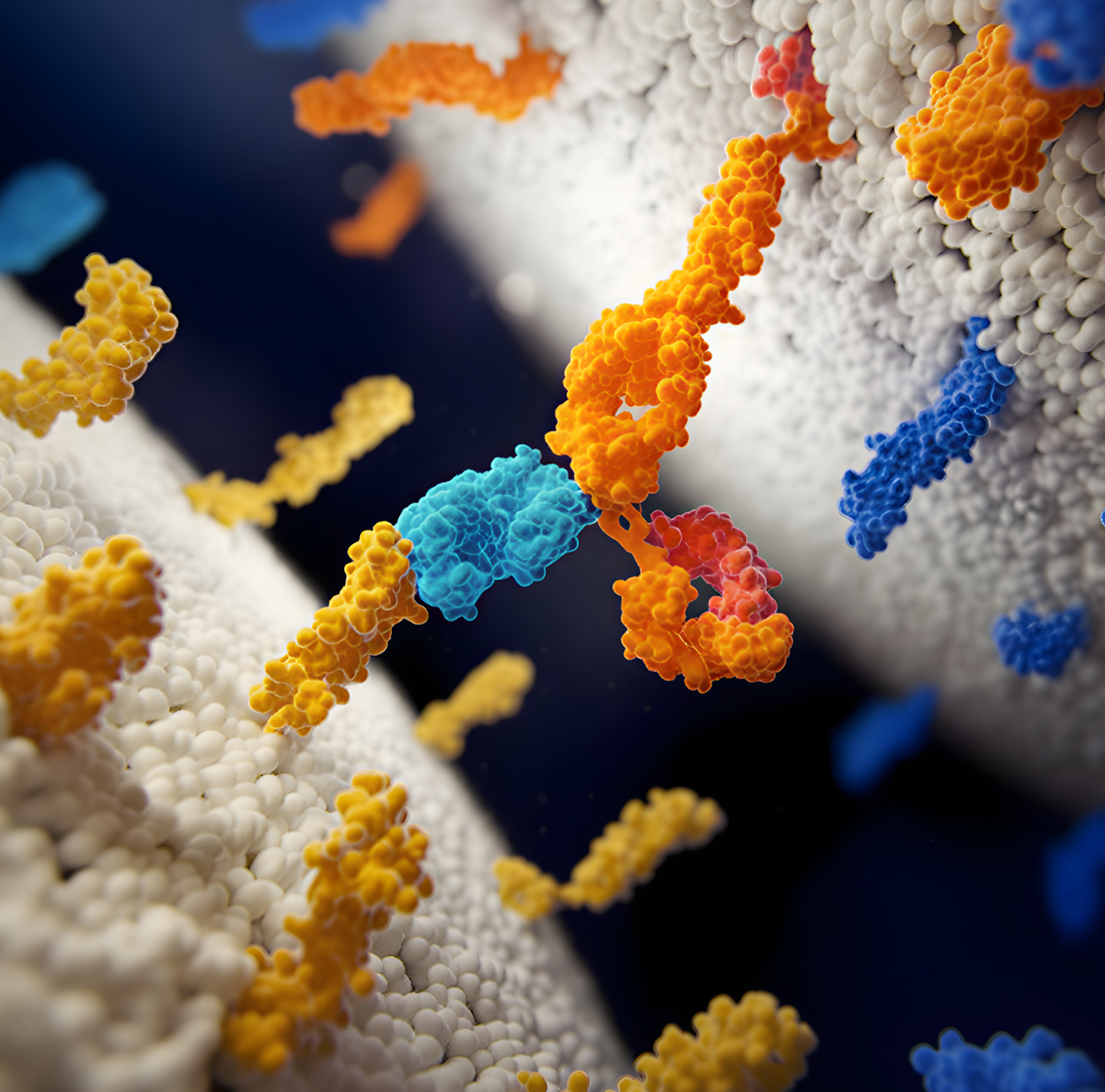

Support IgGs, HCAbs, cLCs, scFvs, and VHH domains.

Assemble multispecifics without re-engineering.

Advance quickly from discovery to manufacturing.

Build panels aligned with your therapeutic goals.
Adimab’s heterodimerization strategies enable symmetric, asymmetric, and higher order multispecific formats. Heavy- and light-chain pairing technologies accommodate a wide range of variable regions, reducing re-engineering. Plug-and-play modules—IgGs, cLC, VHHs, and scFvs—are expressed in final therapeutic formats, eliminating the risks of post-discovery reformatting.
With Chain Exchange (ChEx) technology, we quickly generate and screen large panels of multispecific antibodies. Each construct is evaluated for binding kinetics, expression titer, purity, and cell-based function. Data packages provide comparative insight into options, helping to prioritize multispecifics with the right balance of activity, manufacturability, and developability.
Adimab's proprietary αCD3 and αCD28 binders enable accelerated design and development of T cell engagers. αCD3 binders are functionally tested in redirected cytotoxicity and cytokine assays, while αCD28 binders support tunable co-stimulation across multiple formats. All binders are non-exclusive and compatible with Adimab’s multispecific antibody workflows, supporting diverse construct geometries and valencies.
Multispecific antibodies can carry hidden liabilities that risk derailing your program. Adimab integrates early, repeated screening for hydrophobicity, aggregation, polyspecific reactivity, stability, and expression performance. Candidates with unfavorable profiles are deprioritized upfront, saving time and resources by focusing only on molecules most likely to succeed in downstream development.
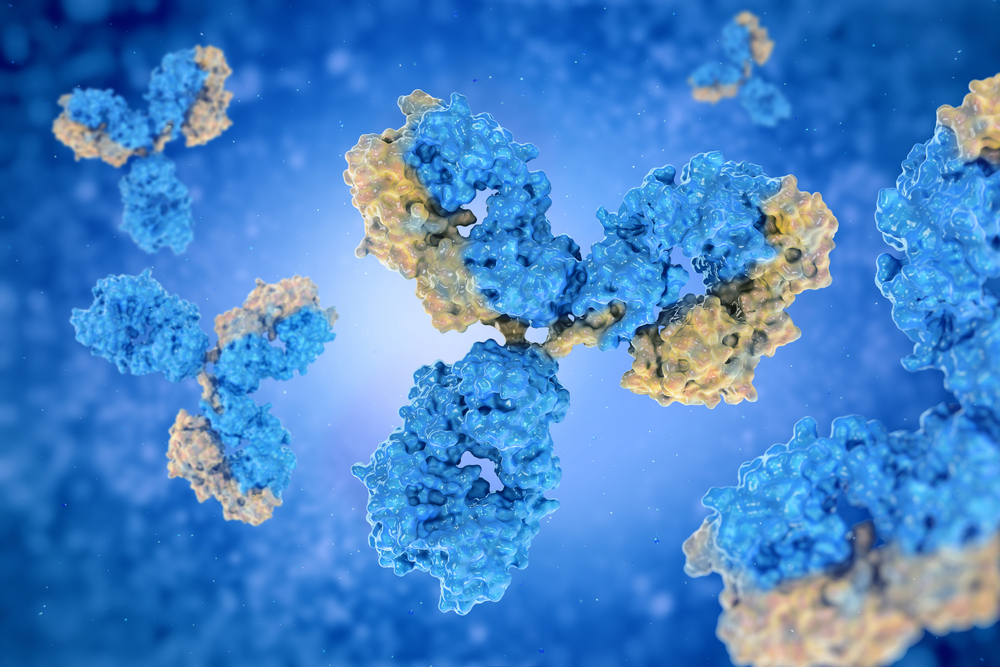
Adimab’s engineered heterodimerization mutations minimize the mispairing challenges of multispecific antibody development.
By promoting correct heavy- and light-chain assembly across diverse architectures, the platform enables reliable expression of molecules with stable, well-controlled biophysical properties suitable for therapeutic development. This approach supports Fab-based multispecifics to generate IgG-like molecules of different valencies.

Beyond conventional IgG scaffolds, Adimab’s platform often incorporates Fabs, VHH domains, and common light chain modules into complex multispecifics.
These formats expand functional possibilities, allowing integration of unique binding domains for new epitopes or mechanisms of action without requiring extensive construct re-engineering. Adimab also develops other fragment-based multispecifics and partner-specified formats.
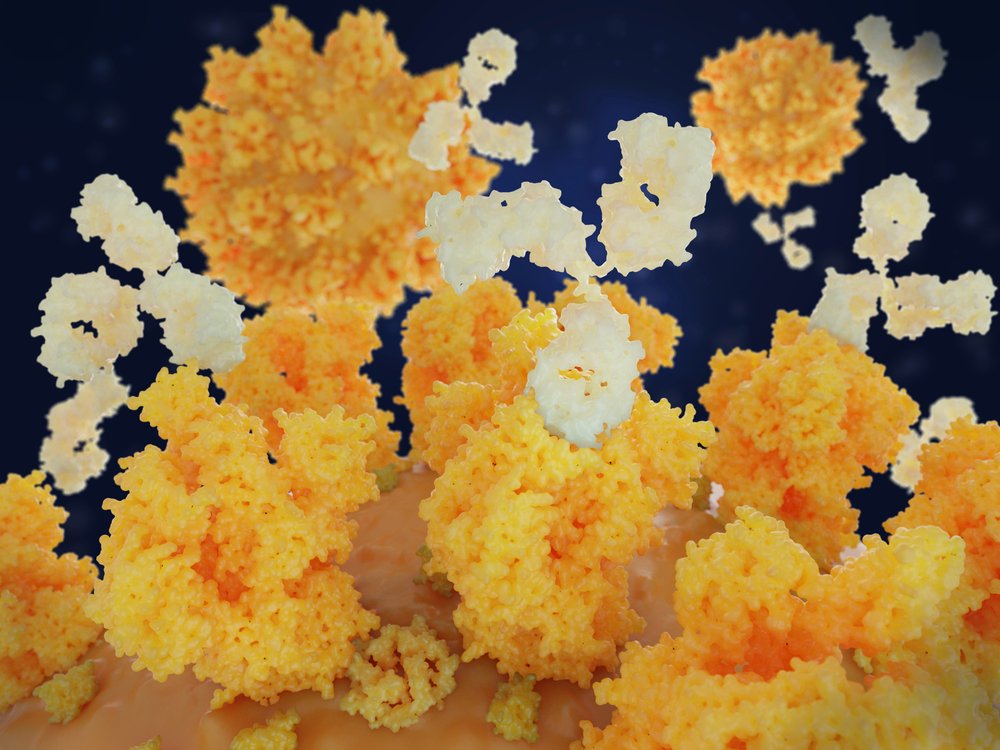
Multispecific antibodies are characterized in relevant cellular assays to confirm biological activity. Binding, cytotoxicity, and cytokine readouts provide functional evidence early, reducing uncertainty in candidate selection.
Combined with high-throughput construct assembly, Adimab’s ability to perform an array of assays on panels of multispecific antibodies accelerates the identification of formats with true therapeutic potential.
Adimab applies proprietary αCD3 and αCD28 antibodies to its multispecific T cell engager programs.
The αCD3 panel spans broad affinities, cyno cross-reactivity, and enhanced developability, validated in activation, cytotoxicity, and cytokine assays. Several αCD3 binders have advanced into clinical trials, giving partners validated, proven tools.
The αCD28 panel, offered in IgG and single-domain formats, delivers diverse bin profiles with tunable agonism.
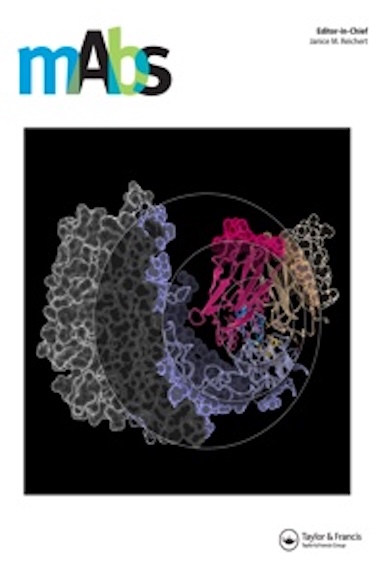
Computationally engineered Fab interfaces eliminate light chain mispairing in IgG-like bispecifics.
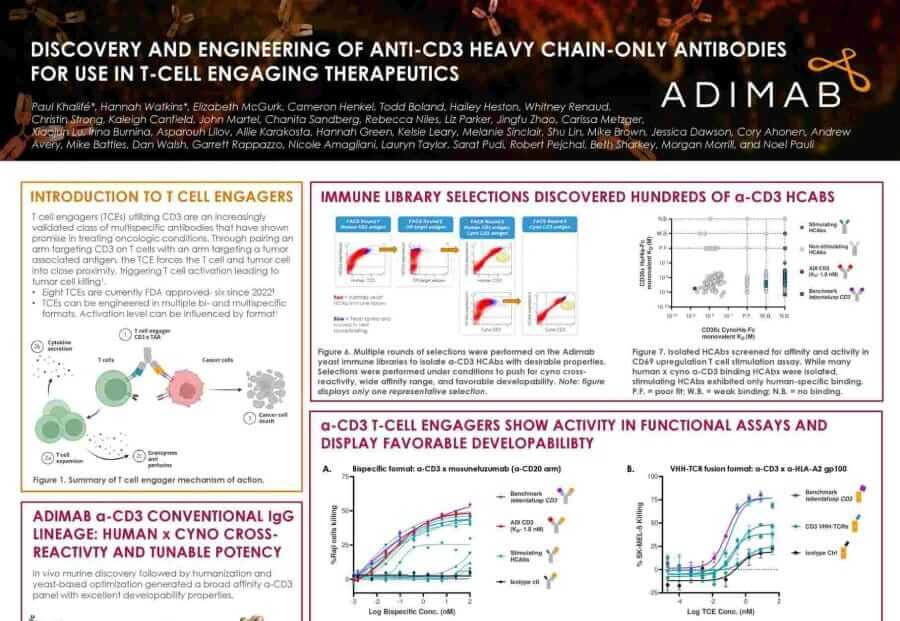
Engineered anti-CD3 HCAbs enable potent, tunable, and developable binders for next-generation TCEs.
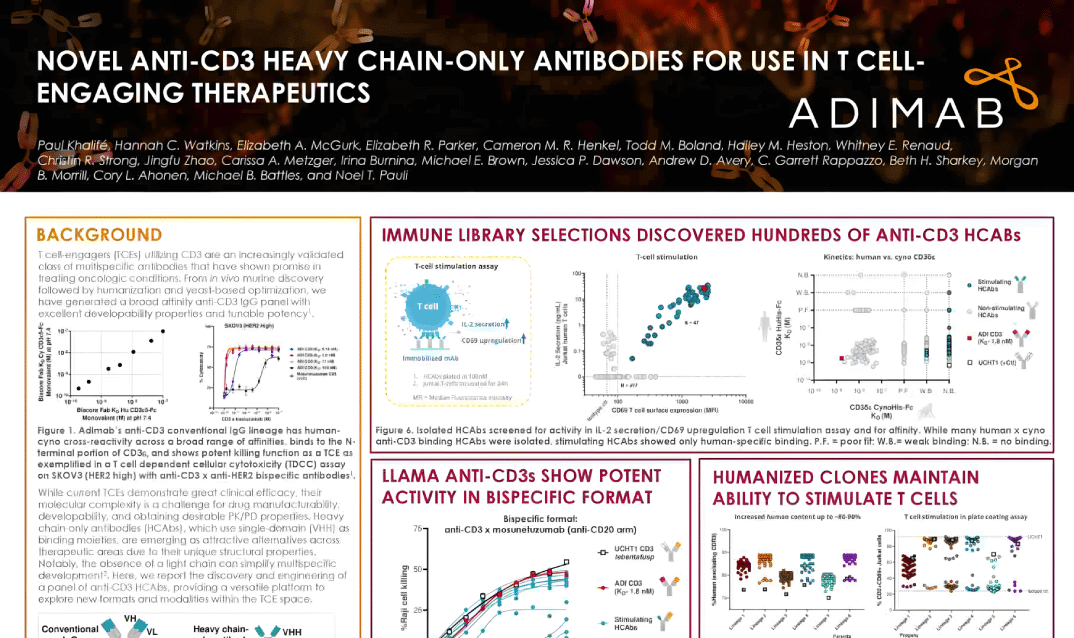
Llama-derived CD3 HCAbs streamline T-cell engager design, combining stability, potency, and modularity.

Access high-quality synthetic and immune libraries delivering therapeutic antibodies for the clinic.

Transform leads into high-affinity, developable candidates through guided engineering and real-time screening.

Leverage AI-guided engineering of non-antibody proteins for tailored binding, stability, and expression.

Learn how our integrated capabilities in discovery and engineering help advance your programs to the clinic.