Discovery and Engineering of Anti-CD3 Heavy Chain-Only Antibodies for Use in T Cell Engaging Therapeutics
Engineered anti-CD3 HCAbs enable potent, tunable, and developable binders for next-generation TCEs

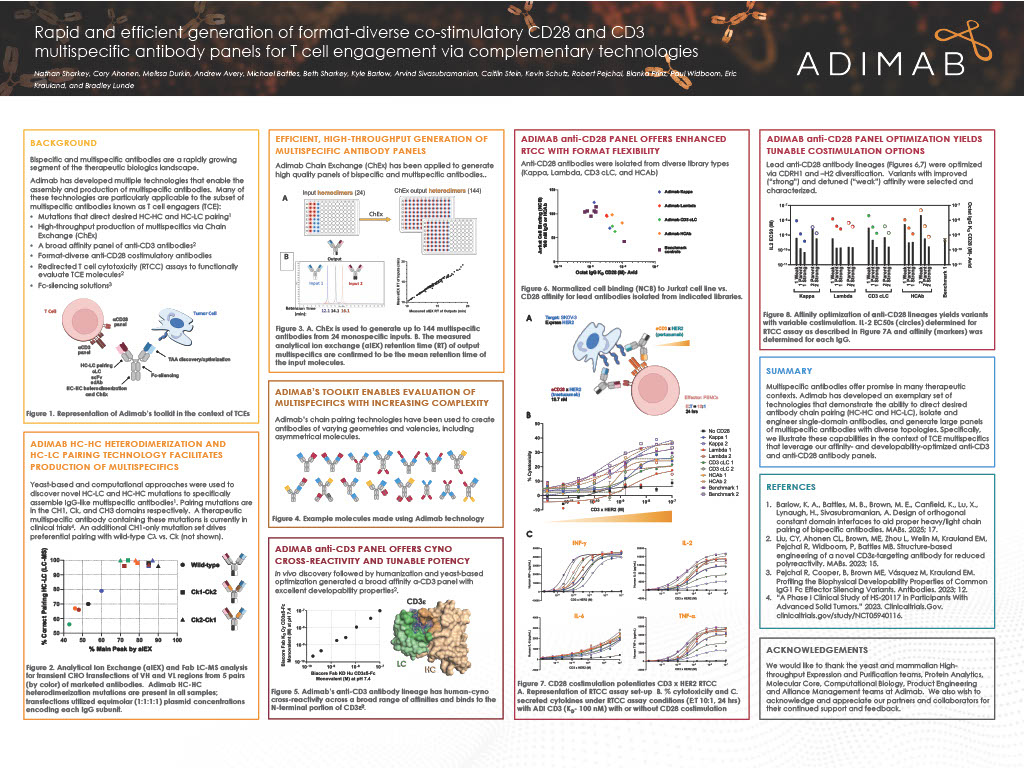
T cell engagers (TCEs) are gaining clinical traction rapidly, but their success hinges on a CD3-binding arm that is potent, manufacturable, and compatible with complex multi-specific architectures. Heavy-chain only antibodies (HCAbs) lack the light chain, reducing assembly complexity while preserving function. In this poster, Adimab scientists established a humanized panel of anti-CD3 HCAbs with tunable activity, mapped epitopes, and strong developability to streamline next-generation TCE design.
Key findings and highlights
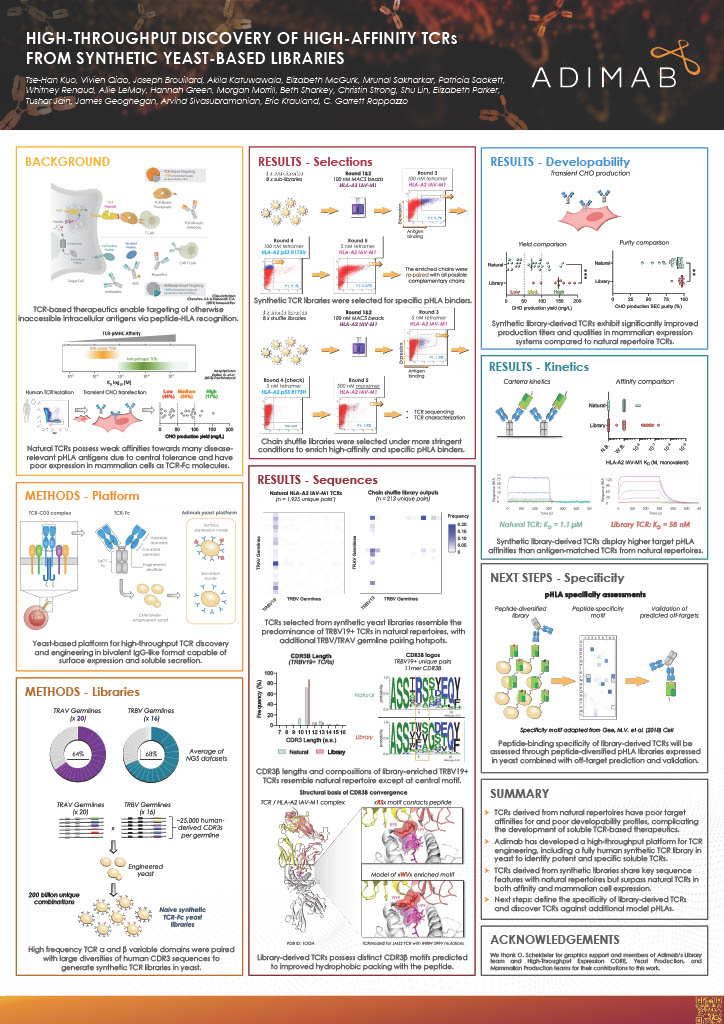
Our study addresses a central bottleneck in TCE programs—the need for compact, developable, and potency-tunable CD3 binders—by delivering a humanized HCAb panel with defined epitope bins and validated function across bispecific and VHH–TCR formats. The panel is available through Adimab’s non-exclusive partnering model to accelerate modular multi-specific design.