High-throughput discovery of high-affinity TCRs from synthetic yeast-based libraries
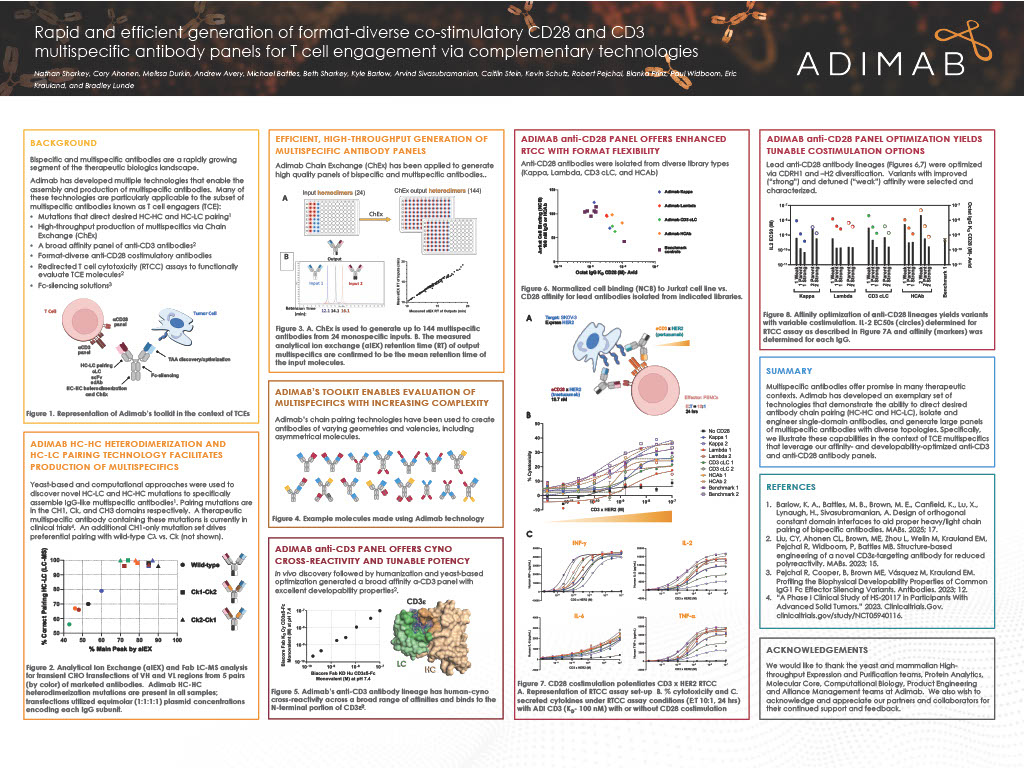
Engineered anti-CD3 heavy-chain–only antibodies with potent T cell activation and strong developability.

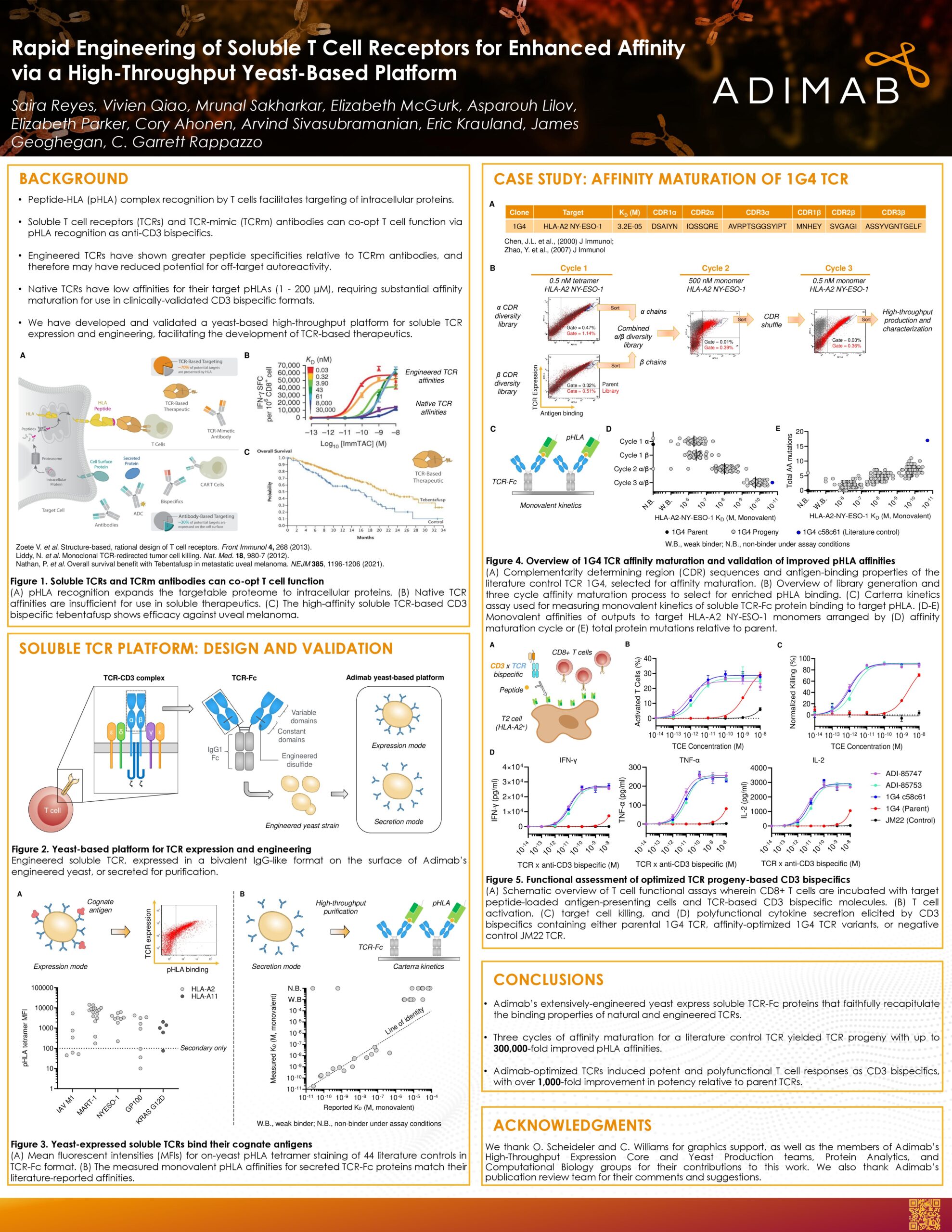
Therapeutic, soluble T cell receptors (TCRs) can access intracellular antigens via peptide–HLA (pHLA) recognition, but natural TCRs often bind weakly and express poorly as TCR-Fc molecules, which consequently presents a key bottleneck for drug development. Adimab scientists address those limitations with a fully human, yeast-displayed synthetic TCR-mimic platform built to discover potent, specific, and manufacturable TCRs at scale.
Approach and results
Overall, our data show that a human synthetic TCR library in yeast reproducibly delivers soluble TCRs that surpass natural scaffolds in both affinity and mammalian expression. These molecules also preserve repertoire-like sequence hallmarks. The approach directly addresses long-standing bottlenecks of natural TCRs and enables accelerated discovery for TCR-based therapeutics.