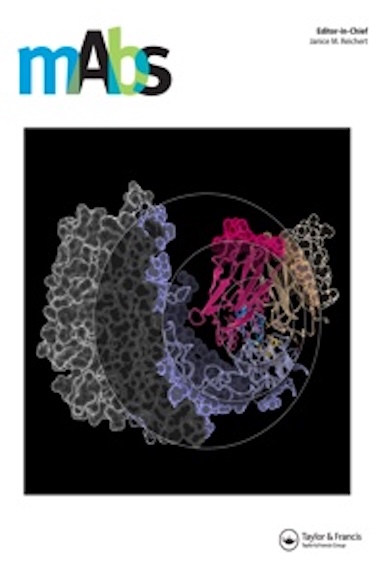
Tushar Jain, Bianka Prinz, Alexander Marker, Alexander Michel, Katrin Reichel, Valerie Czepczor, Sylvie Klieber, Wei Sun, Sagar Kathuria, Sevim Oezguer Bruederle, Christian Lange, Lena Wahl, Charles Starr, Alessandro Masiero, Lindsay Avery
mAbs, 16(1). DOI: 10.1080/19420862.2024.2384104
July 31, 2024
The increasing use of antibodies as therapeutic agents is revolutionizing modern medicine, offering targeted treatments for a range of diseases, including cancer and autoimmune disorders. However, the success of these biologics depends not only on their efficacy but also on their pharmacokinetic (PK) properties, which influence dosage, safety, and therapeutic outcomes. Predicting PK behavior early in the discovery timeline of these antibodies is therefore crucial for optimizing resources and avoiding costly late-stage failures. This study, conducted in collaboration with Sanofi, demonstrates the benefits of integrating in vitro PK-related assessments into traditional developability workflows to de-risk and improve early-stage decision making.
The limitations of traditional PK testing
Traditionally, PK assessments are performed in vivo, typically using rodents or primates to measure antibody clearance, distribution, and serum half-life. While effective, these studies come with inherent limitations, including variability due to species differences and ethical considerations related to animal testing. Additionally, in vivo studies are costly and time intensive, potentially delaying critical go/no-go decisions in the drug development pipeline.
In vitro assessments and their correlation with PK
In vitro PK assessments provide an alternative approach that can complement and, in some cases, replace certain in vivo studies. These assays evaluate key biophysical developability factors such as non-specific and self-interactions, neonatal Fc receptor (FcRn) interactions, and charge properties that influence an antibody’s PK profile.
Integrating in vitro insights into development workflows
The authors propose that incorporating in vitro PK assessments alongside developability workflows, such as hydrophobic interaction chromatography retention time (HIC RT), polyspecificity reagent (PSR) assay, affinity-capture self-interaction nanoparticle spectroscopy (AC-SINS), and isoelectric point determination. enhances the evaluation process by providing predictive insights earlier in development. This approach improves efficiency, prioritizes candidates with favorable characteristics, and minimizes downstream risks. Adopting this methodology helps improve success rates and reduce costs in later-stage testing.
Conclusion
This research suggests there is value in augmenting traditional antibody discovery workflows with in vitro assessments correlated with PK outcomes. These assessments provide valuable early-stage insights, enabling a more informed selection of lead candidate antibodies for development and reducing reliance on resource-intensive in vivo studies.
Incorporating in vitro PK assays during antibody optimization ameliorates developability risks and accelerates therapeutic antibody development, improving overall pipeline efficiency.
For more details, read the full article in mAbs.