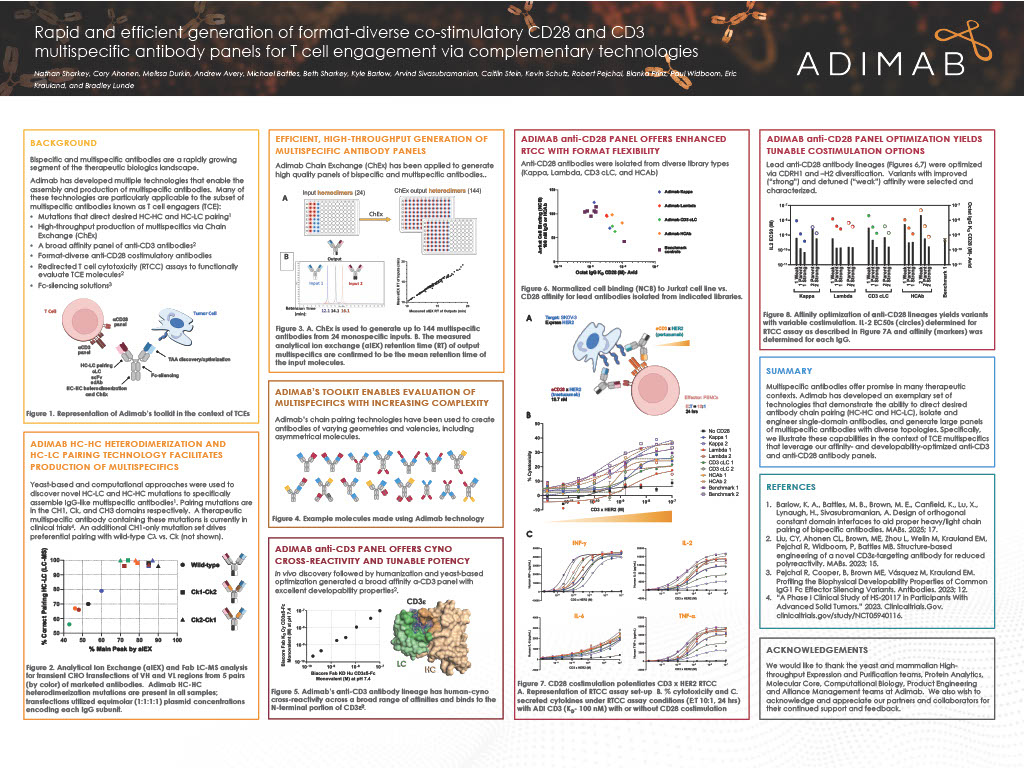
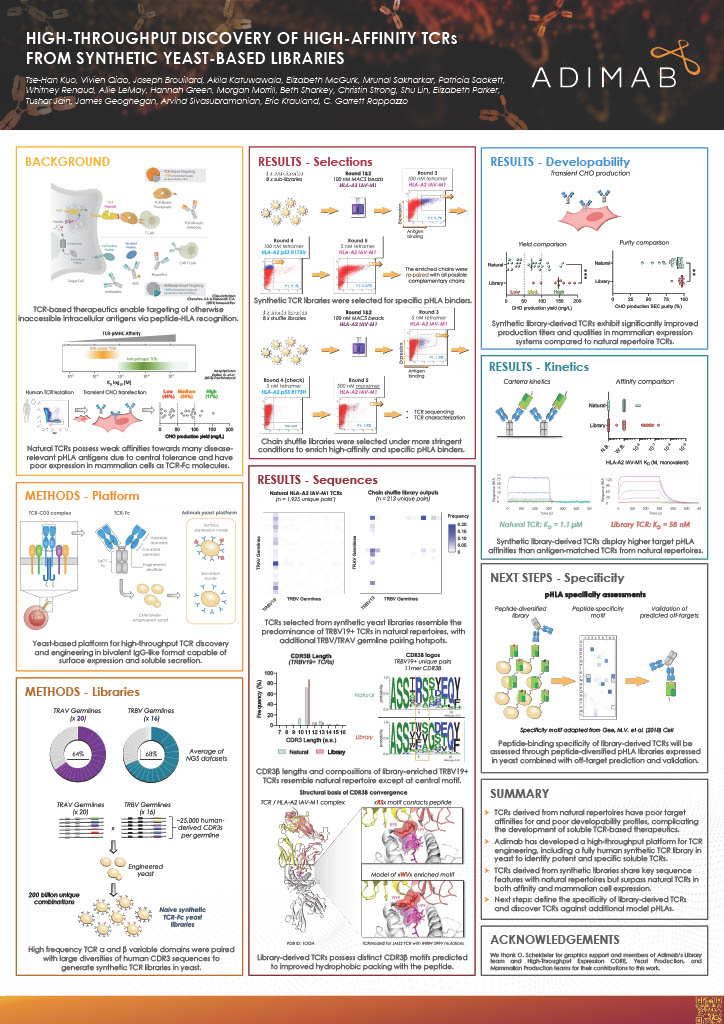
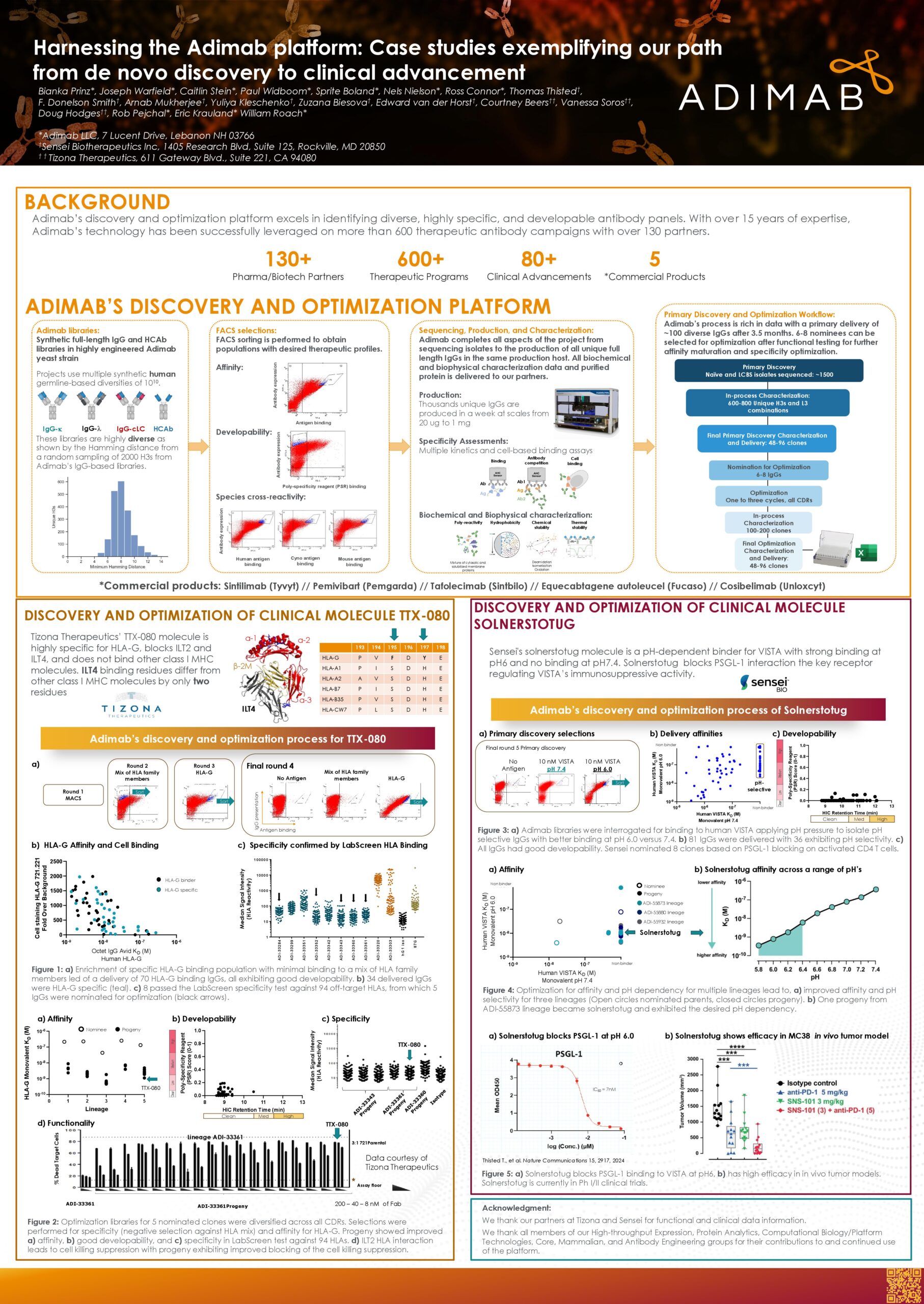
Rapid Engineering of Soluble T Cell Receptors for Enhanced Affinity via a High-Throughput Yeast-Based Platform
Yeast-based engineering yields high-affinity soluble TCRs, enabling potent, precise T cell therapeutics

Using a high-throughput yeast-based platform, Adimab scientists have engineered soluble T cell receptors (TCRs) with dramatically enhanced affinity for peptide–HLA (pHLA) complexes, enabling their use in TCR × CD3 bispecific therapeutics. Native TCRs bind pHLA complexes weakly (1–200 µM), which is inadequate for therapeutic formats. To address this, the Adimab platform can express soluble TCRs on the surface of our engineered yeast and then apply iterative rounds of selection to push affinity into therapeutically relevant ranges.
Key findings and highlights:
Adimab’s yeast-based platform provides a scalable route for converting weak-binding natural TCRs into high-affinity, high-specificity, functional bispecifics. These modalities allow targeting of intracellular antigens via pHLA complex recognition.